Narration and captions included. Learn at your own pace.
/
Exercise
SPCC Program
Why oil spills are such a big deal
Explored 0 of 5
Click each number to see what it is. Next unlocks when you’ve opened all 5.
Lost inventory
Loss inventory of fuel and other oils
Operational disruption
Disruptions to operations
Slip / fire hazard
Safety hazards to Tamarack Hollow Wind personnel
Cleanup costs
Cost of cleaning up the spill and disposal of contaminated materials
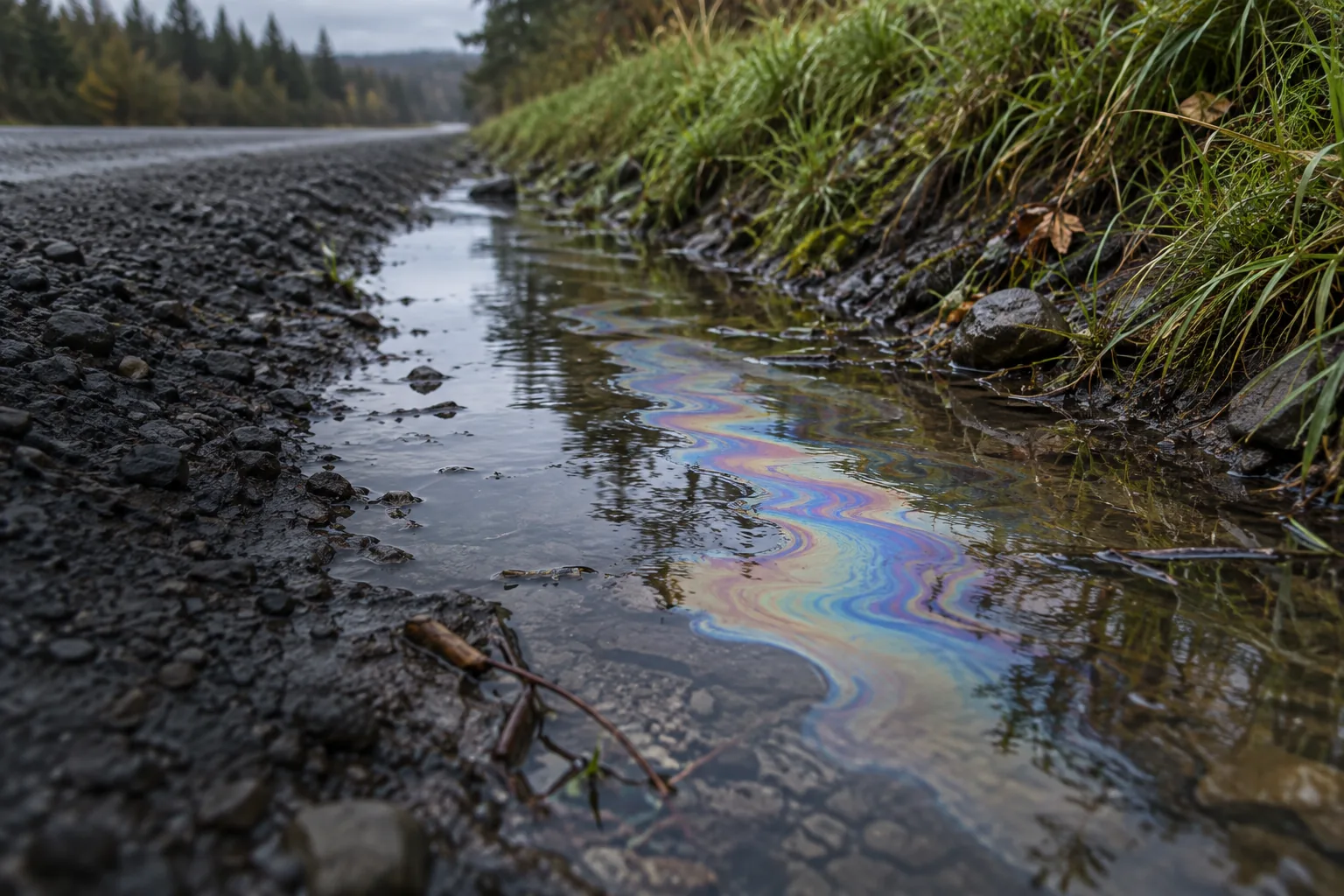
Environmental impact
Impact to the environment
Transcript
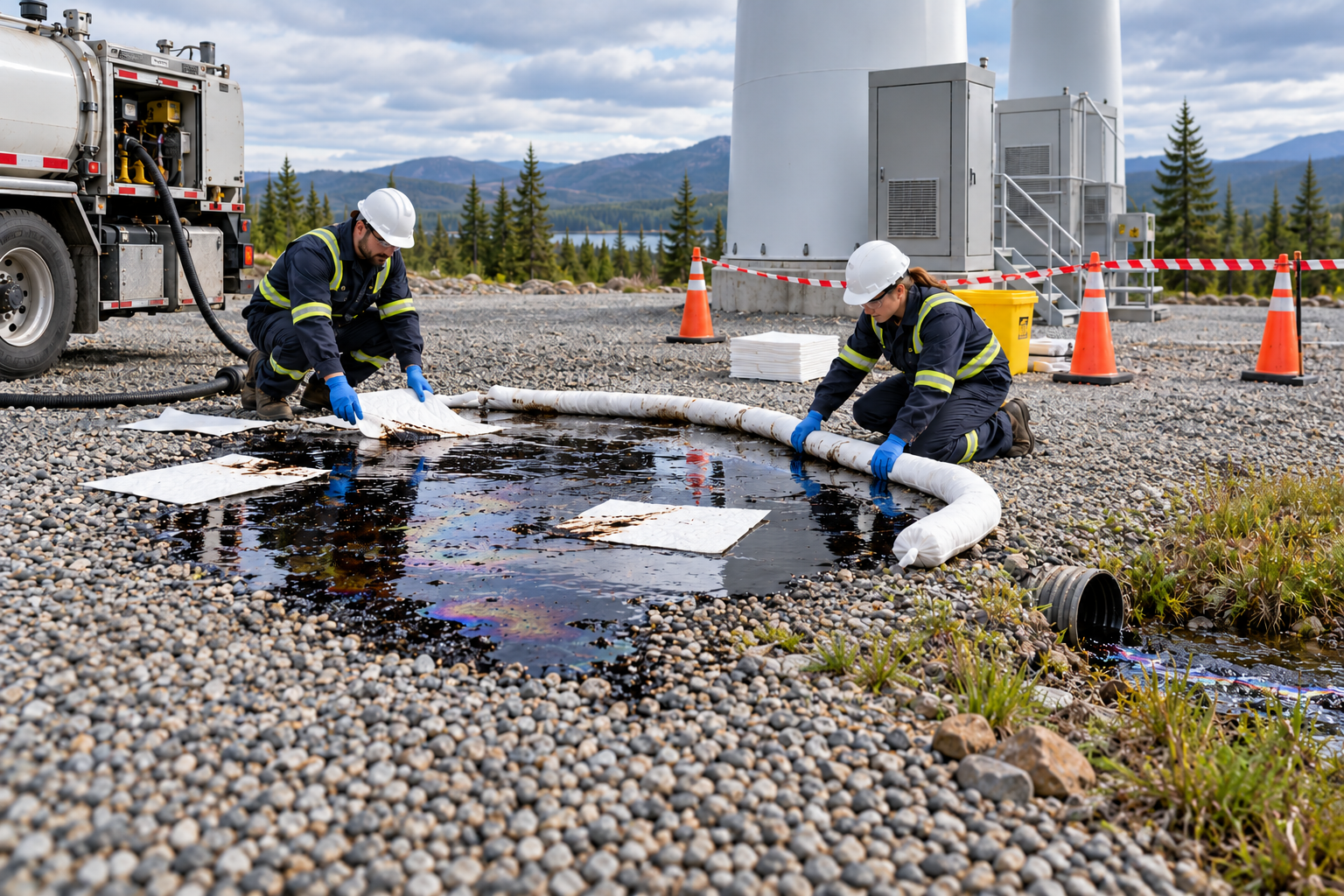
Why is an oil spill such a big deal? First, it's lost product. Spill 1,000 gallons of fuel at $6 a gallon, and you've lost $6,000 on the ground. Second, it disrupts operations, with a big oil patch in the middle of your work area. Third, it's a safety hazard: people can slip, trip, and fall, and flammable liquid can cause fires. Fourth, cleanup costs money. You dig up contaminated soil and dispose of it, and you lose time and use of space. And last, it harms the environment, the clean water and fish we all enjoy. Click each number to see what it is.
Tamarack Hollow Wind Farm · site diagram
Reading your site map
Contours: 40 ft · labelled every 200 ft● Turbine — Stream
Transcript
Your plan's site diagram shows where oil would go if it ever got loose. The thin lines are contour lines. Each one joins points at the same height, and the numbers on them are that height in feet above sea level. Read the numbers to know which way is down. Here they climb toward the ridge, and fall away toward the stream. Where the lines crowd together, the ground is steep. Oil runs downhill, from the higher numbers to the lower ones, straight across the lines. So follow it from the pad. Down the slope, into the low ground, and on to the stream. Streams always run in the low ground, so that is where spilled oil ends up. That stream is the water you have to protect. Know which way your pads drain before you ever get the call.
New SPCC Plan Format
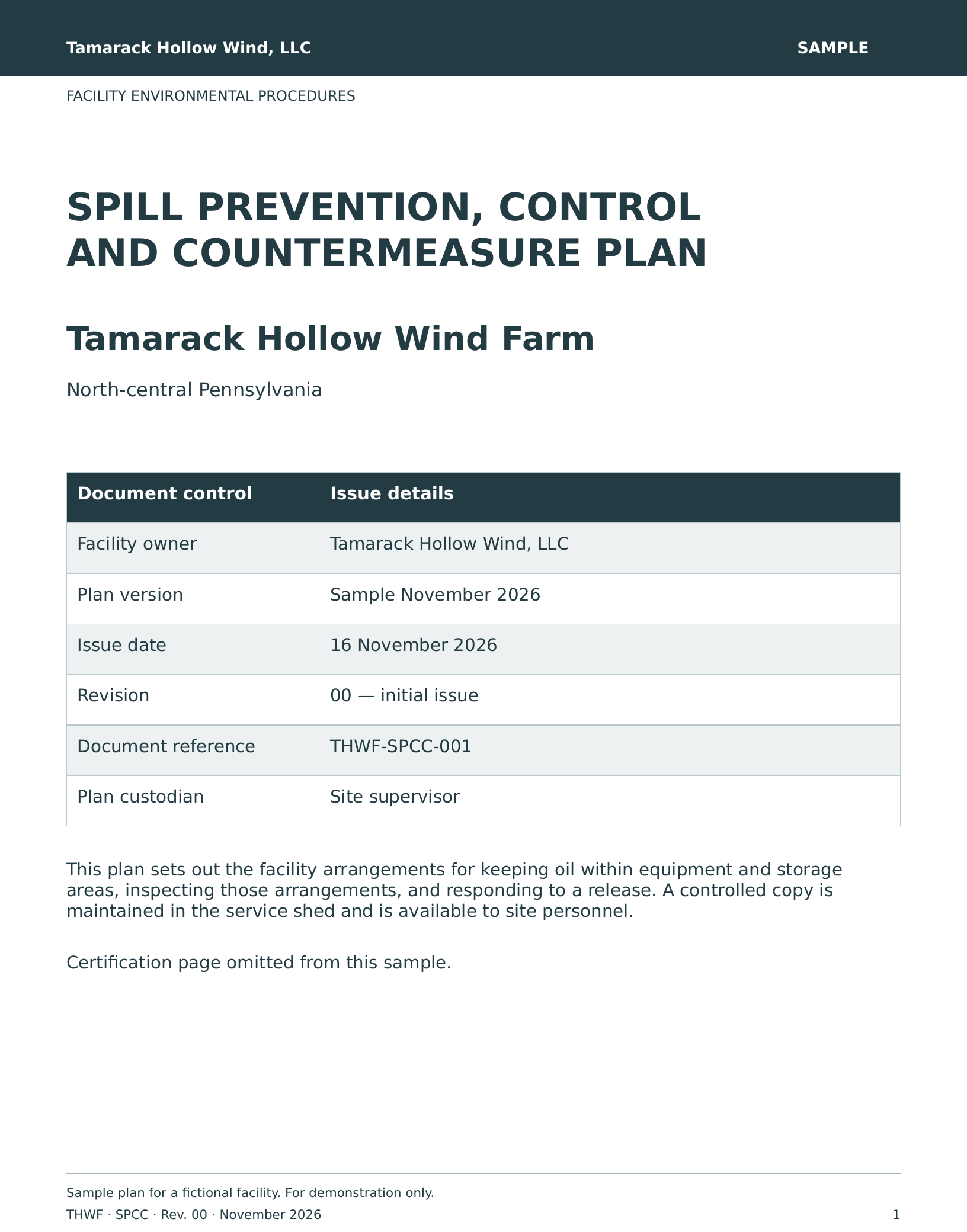
Current facility-specific SPCC Plan:Tamarack Hollow Wind Farm
Tamarack Hollow Wind Farm SPCC Plan, Sample November 2026
From your SPCC Plan · cover page
Plan version: Sample November 2026
Plan oil inventory: 7,080 gallons
Turbines: 12
Transcript
This is the current SPCC Plan for the Tamarack Hollow Wind Farm. As a key part of this training, we will review key elements of this plan and how it is designed to help you manage oils at your facility.
Periodically Ensure the following are up to date:
Contact List
Oil Inventory
Site Diagram
Transcript
Periodically review the Contact List, Oil Inventory, and Site Diagram to make sure that they accurately reflect current site conditions. If a change has occurred it must be updated. As already noted those changes that increase or decrease the amount of oil at your site must be certified by a Professional Engineer.
Section 1
Certified oil inventory:7,080 gallons.
Turbines:12.
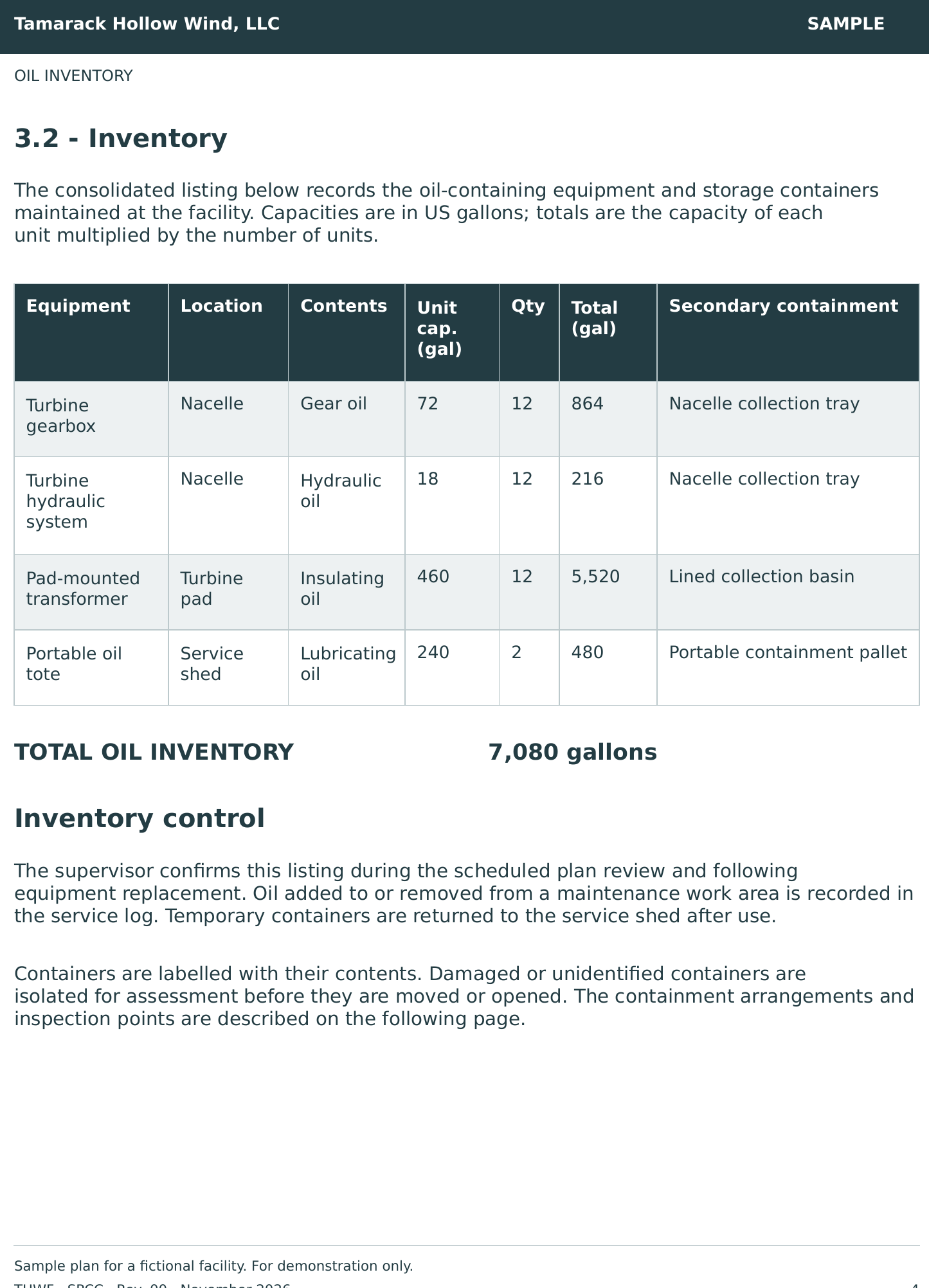
Tamarack Hollow Wind Farm SPCC Plan, Sample November 2026
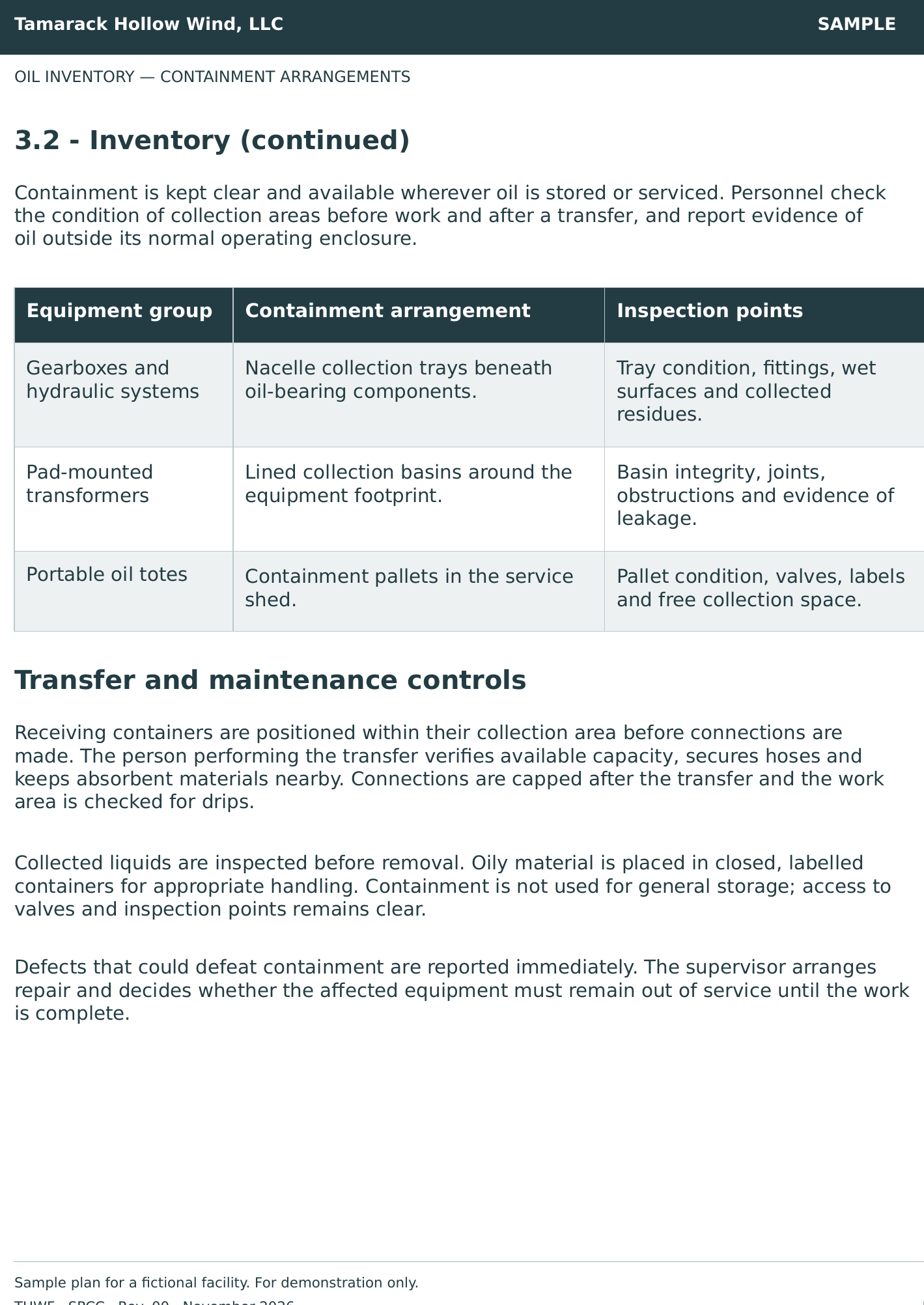
From your SPCC Plan · §3.2 Inventory · pages 4–5
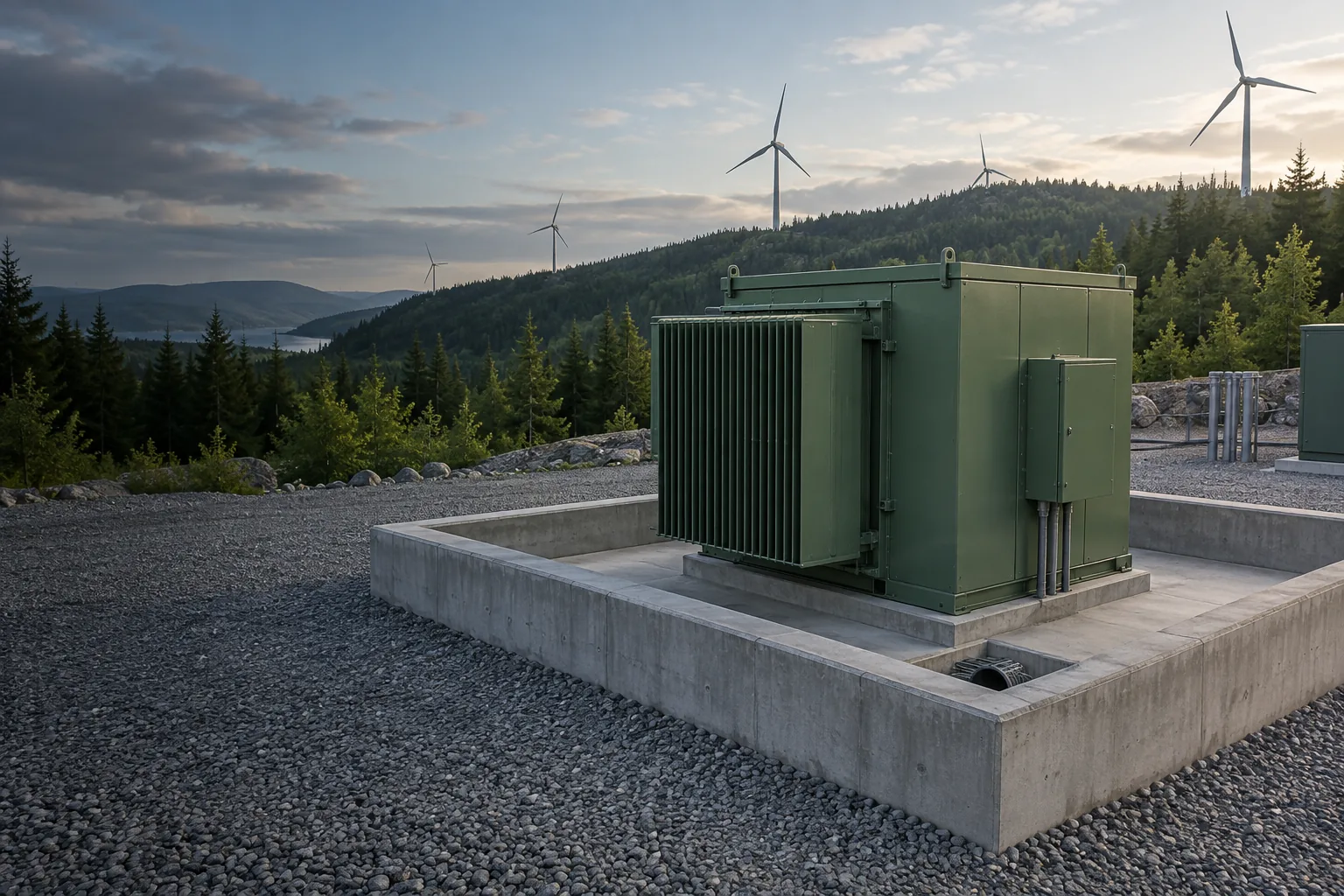
Pad-mounted transformer — 5,520 gal
Turbine gearbox — 864 gal
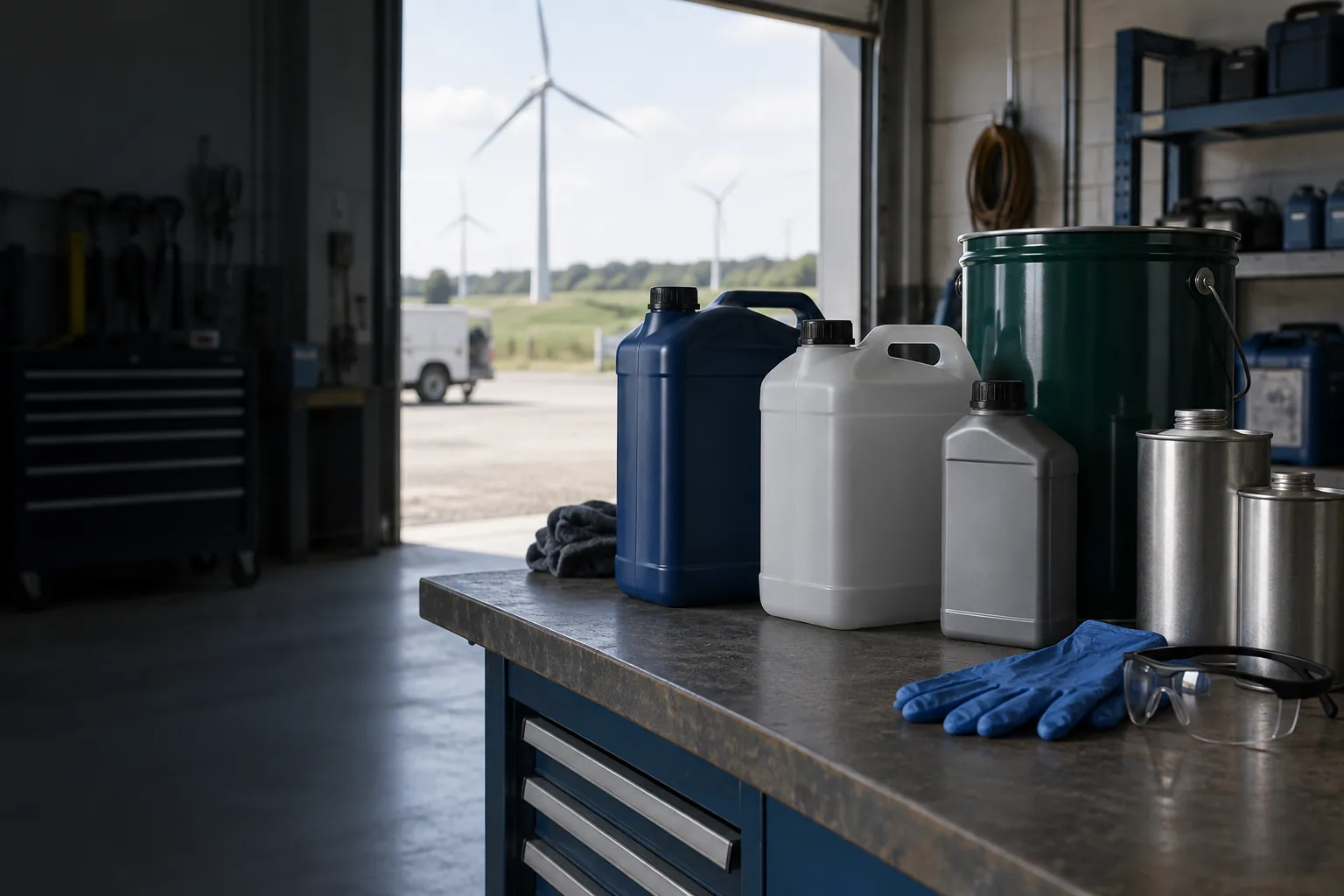
Portable oil tote — 480 gal
Turbine hydraulic system — 216 gal
Oil inventory
Transcript
Section 3.2 of the SPCC Plan provides an inventory of bulk oil containers at the facility, to include aboveground storage tanks, drums, transformers, and Wind Turbine Generators. Review this inventory, if there are any changes at the facility, this table must be updated and certified by a Professional Engineer.
Secondary Containment & Engineering Controls
Purpose of Secondary Containment
Comply with the requirements of the regulation.
To protect surface waters.
Confine spills to a small area at or near the storage system.
Enable personnel to clean-up spills before they are allowed to migrate off-site.
Transcript
Secondary containment provides a lot of advantages. First, comply, because the regulations say you've got to. Second, protect surface waters. Third, confine a spill to a small area at or near the storage system. Fourth, buy yourself time to clean it up before it migrates off-site. Containment is not a place to store contamination. It holds the spill so you can clean up in a timely fashion.
Key Elements of the SDS
Safety Data Sheets
Section 1 – Product & Company Identification
Section 2 – Hazard Identification
Section 3 – Composition/Information on Ingredients
Section 4 – First Aid Measures
Section 5 – Fire-fighting Measures
Section 6 – Accidental Release Measures
Section 7 – Handling and Storage
Section 8 – Exposure Controls/Personal Protection
Section 9 – Physical and Chemical Properties
Section 10 – Stability and Reactivity
Section 11 – Toxicological Information
Section 12 – Ecological Information
Section 13 – Disposal Considerations
Section 14 – Transport Information
Section 15 – Regulatory Information
Section 16 – Other Information
Transcript
The oils and chemicals in your tanks and gearboxes come with a safety data sheet. They used to be called material safety data sheets. Now every sheet follows the same 16 sections, in an order set in stone. Section 2 is always hazards. Section 5 is always firefighting. So look at your sheets before you have a spill. For a spill, you'll also use the sections on first aid, accidental release, and protective equipment. If a product comes without a sheet, look it up online.
Match each term to its meaning. Secondary containment confines spills near the storage system. Check the safety data sheet for hazards, and choose the absorbent for the material. Keep your spill kit ready.
Personal Protective Equipment
Important Considerations when Selecting PPE
Your Level of Training and Experience
Your Health
The Chemical Threat(s)
Site and/or task specific requirements
Physical state of contaminants
Exposure time
Likelihood of direct exposure
Degree of stress
Transcript
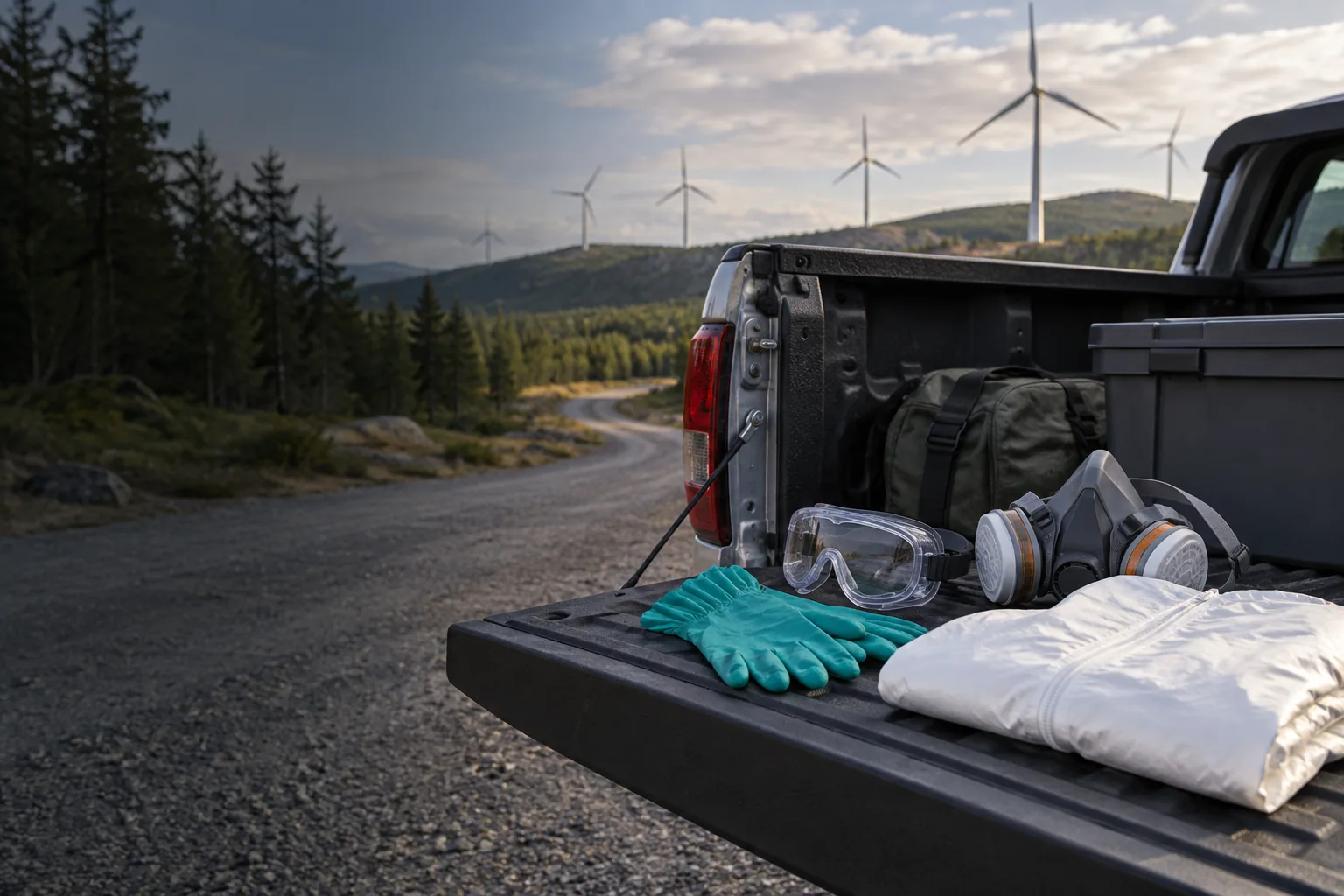
When you select PPE, several things matter. Start with you: your training and experience. Then your health. Summer heat in a respirator and coverall can overwhelm you, even if you're in great shape. Masks fog up, and you can't communicate with each other. Next, the chemical threat. Ask how it could get into your body. Then the site and the task. Look at the physical state of the contaminant. Think about how long you'll be exposed. Judge how likely direct contact is. And weigh the stress the job puts on you.
Basic Steps to Spill Response
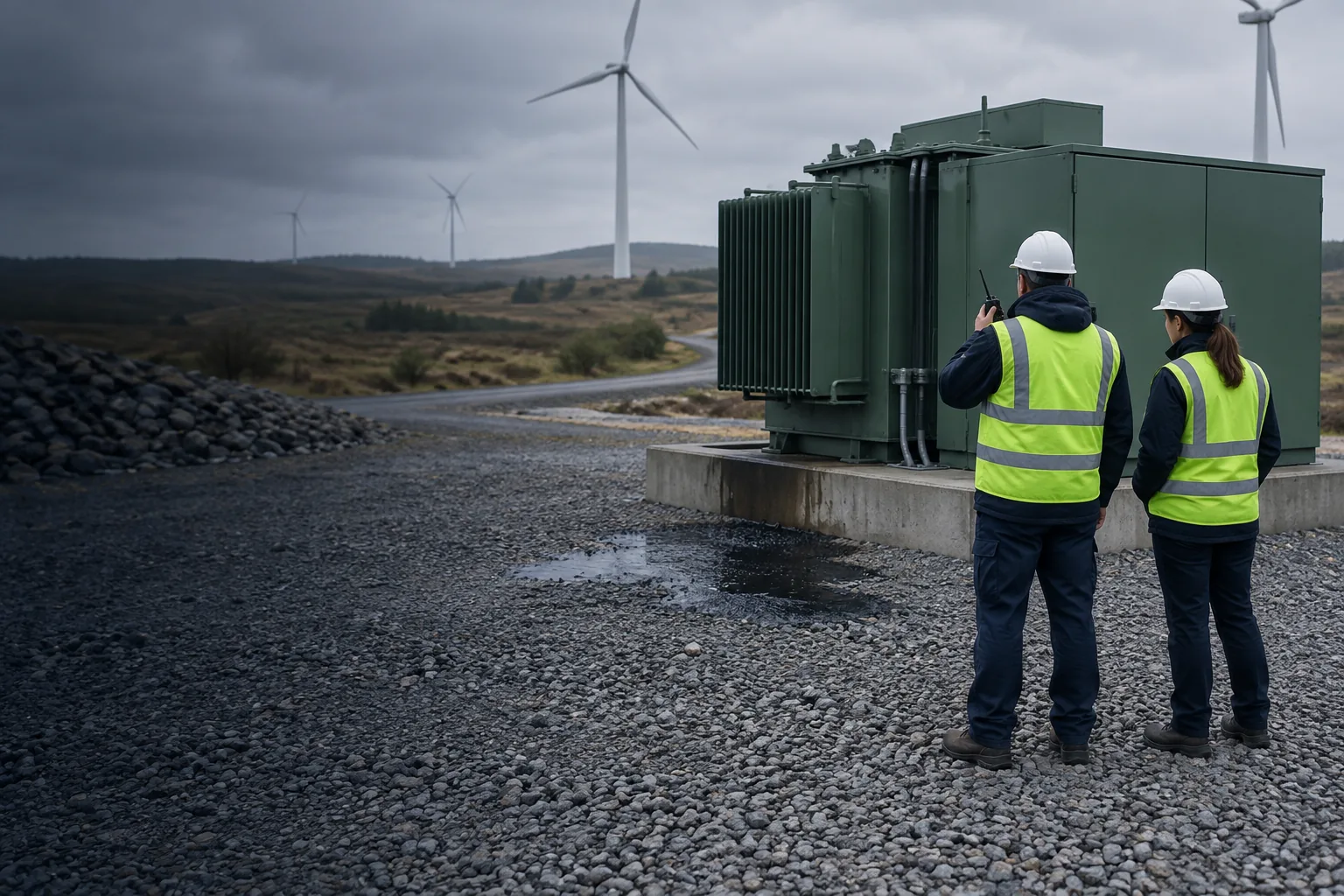
Step 1 - Assessing the Risk
Where is the spill?
Where is the spill headed?
What is the identity of the leaking material?
What are the hazards to responders?
What other types of hazards are in the area that may increase the over all danger of the situation?
Step 2 - Protect Yourself
At awareness level, recognize the release, protect yourself, warn others, and notify from a safe location. Take no further emergency response action unless separately trained and authorized.
Use only PPE selected for the product and task under the facility hazard assessment and within your training.
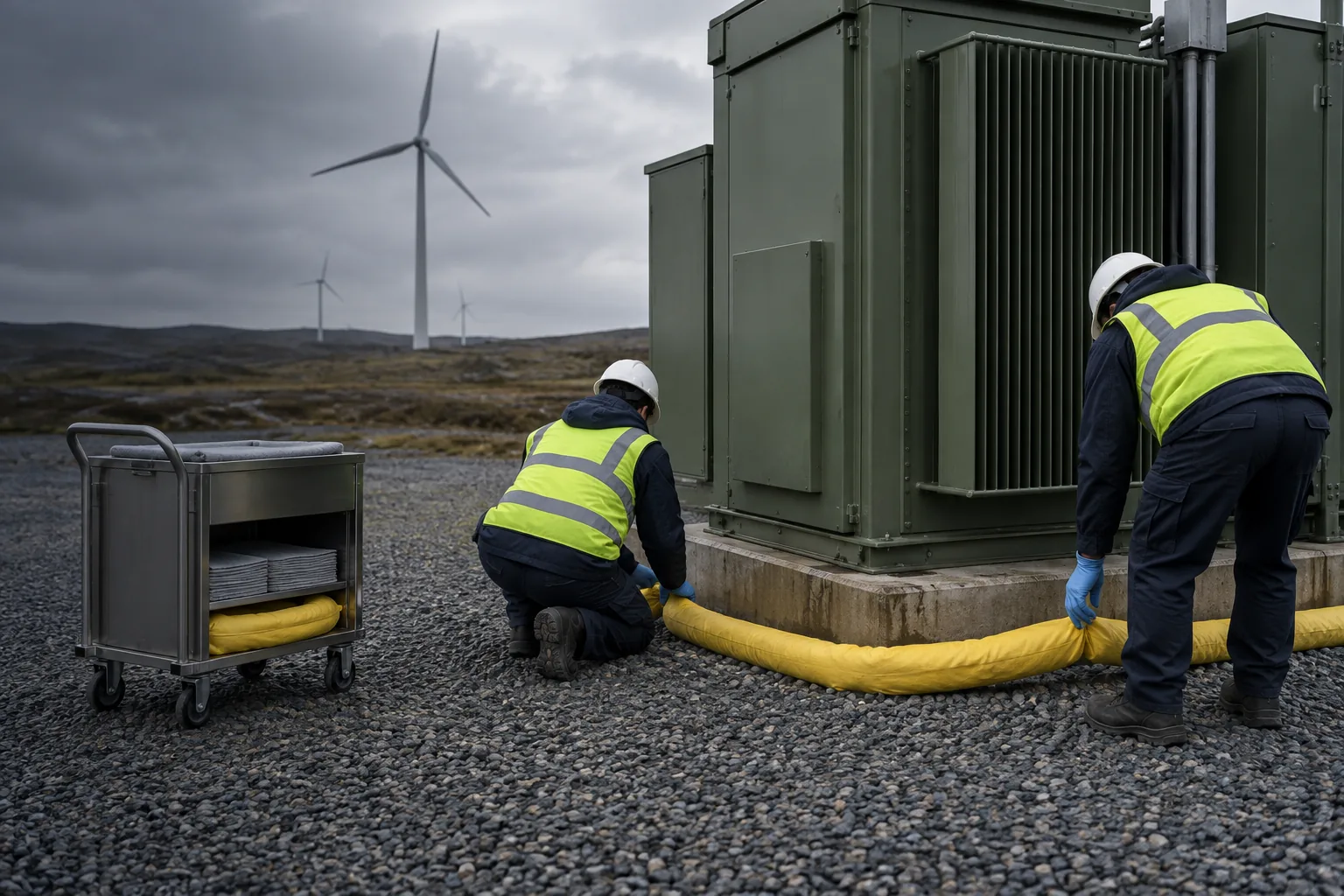
Steps 3 & 4 - Stop the Source & Confine the Spill
Reduce the spread of contamination.
Reduce or minimize damage to the environment.
Prevent escape into water sources.
Reduce clean-up costs.
Steps 5 & 6 – Clean-up the Spill and Decontaminate
Incidental spills that you are able to clean-up safely based on your level of knowledge of the spilled substance and availability of PPE should be cleaned up.
Contaminated absorbents and other media should be put in a 55-gallon drum or other container.
Decontaminate people and areas impacted by the spill.
Transcript
Step 1 is assessing the risk. First, find where the spill is and where it's headed. A spill confined inside a building, with no storm drains nearby, is a smaller emergency than one heading out the door. Next, identify what's leaking — solvent, antifreeze, oil, or acid. Then know the hazards to responders. The number one cause of injury in spill response is slips, trips, and falls. People rush and stop paying attention. So slow down. Finally, look for other hazards in the area that raise the danger. Think ignition sources, energized equipment, vehicles driving through, and a loading dock you could fall off. Step 2 is protect yourself. Each situation is a little different, so think about how you're going to protect yourself. At awareness level, recognize the release, protect yourself, warn others, and notify from a safe location. Take no further emergency response action unless separately trained and authorized. Use only PPE selected for the product and task under the facility hazard assessment and within your training. Steps three and four: stop the source, then confine the spill. If you can do it safely, close a valve or set a drum upright. Then keep the spill to a small area. And protect the storm water inlets. You limit the spread of contamination. You minimize damage to the environment. You keep the spill out of water sources. And you cut cleanup costs. Steps 5 and 6: clean up the spill, and decontaminate. First, clean up only an incidental spill that you can handle safely. That depends on what you know about the substance and the PPE you have. If it isn't safe for you, it isn't yours to clean up. Use your absorbents, and keep skimmers on hand. Next, put contaminated absorbents in a 55-gallon drum or other container. Then decontaminate yourself and the areas the spill touched.
Spill Reporting
Oil reaches water and creates a visible sheen. A film, sheen or discoloration on the water is a harmful discharge. Choose the reporting conclusion and read the explanation.
There is oil under the transformer. Assess the risk and protect yourself. Where is the spill headed? Stop the source only if it is safe and you are trained and authorized. Confine the spill, protect drainage, and follow the notification procedure.
The Bottom Line
Know your limitations and don’t get yourself or someone else hurt!!
Transcript
The bottom line is simple. Know your limitations. Your equipment, your PPE and your training limit you to incidental spills — the ones you're equipped and trained to handle. Don't get yourself or anyone else hurt by asking them to do something they aren't protected against or trained for. They may not have the right PPE or the right absorbent and supplies. If a spill is beyond your capabilities, bring somebody else in that is better equipped and experienced. Don't try to tackle the situation alone.
Important Questions
Who is initially in charge of the situation?
Who should be notified?
What can be done to control or otherwise minimize the hazards and impact of the spill?
Who should clean up the spill?
Transcript
When a spill happens, four important questions should be considered. Know who's in charge upon discovery. Know who to notify: your site manager, and anyone else your plan lists. Know how to control the spill. Shut the drain valve, roll the drum over, isolate the situation. If the flow is heading downhill, get ahead of it, but only if you can do it safely. Dig a small trench ahead of the spill, or put down plastic liner and anchor it with sandbags. Then add absorbents. Use whatever you've got. And know who cleans it up, whether that's your own people or a contractor your plan names.
Where is the spill headed? Read the contour elevations and select the stream the marked pad drains toward. Oil moves from higher ground to lower ground. Protect the water in its path.
Contours every 40 ft, labelled every 200 ft (feet above sea level) Substation pad Turbine Stream